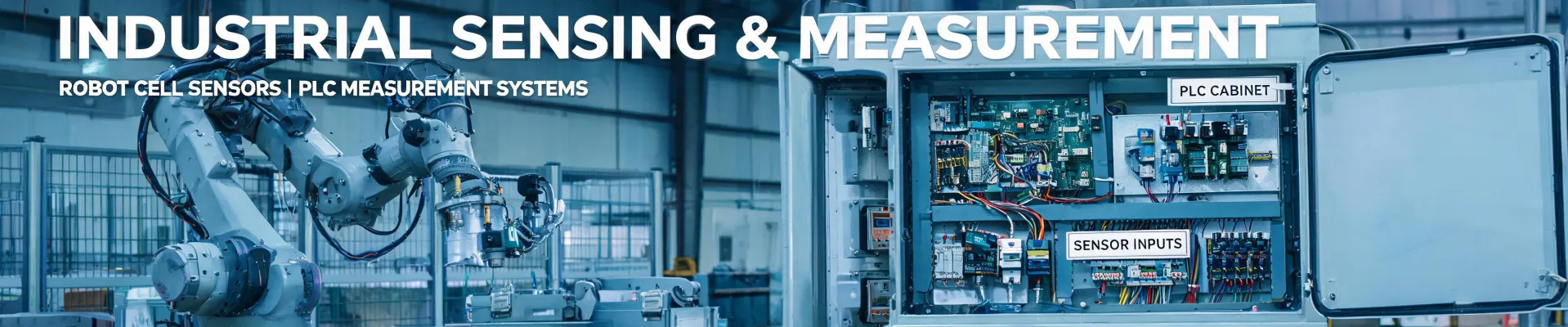
It Started With a Sensor
Back in early 2022, I was handed a task that sounded simple enough: find a vision sensor capable of reading two different date codes on a fast-moving line. We were a mid-size packaging facility, running about 5 million units per year through a single fill line. The existing setup—an older keyence system—was losing reads on about 3% of parts. That may not sound like much, but over a year, those 150,000 unreadable items meant manual rework and angry calls from a major retailer.
My boss said: "Find something cheaper. This doesn't need to be complicated."
The question I should have asked was: "Cheaper in what way?" The question I actually asked was: "How soon do you need it?"
Here's the thing: I assumed a vision sensor was a vision sensor. Read code, send pass/fail signal. How different could they be?
Let me tell you how I learned differently.
The Wrong Approach
Why I Picked the First Option
I'd heard about a few budget-friendly sensor brands at a trade show in 2021. People swore they were "good enough." I spent a week comparing spec sheets—resolution, frame rate, IP rating. I ignored everything else. The unit I chose had good resolution, a decent price ($3,200), and a lead time of 4 weeks. I ordered two.
First mistake: I didn't check whether the camera could actually handle the variable lighting conditions on our line. The line runs 24/5. Lighting changes with time of day, ambient temperature, and even the accumulation of dust on the plexiglass shield. This is one of those things that looks fine in a lab environment but falls apart on the floor.
The sensors arrived in week 4. We installed them over a weekend. By Tuesday, we had a problem.
The Unraveling
The sensors worked—sort of. When the lighting was consistent, they read 99.2% of codes. But when the operator adjusted the line speed—which happens maybe 6 times per shift—the read rate dropped to 82%. I spent two weeks tweaking settings, adjusting mounting angles, adding supplemental lighting. Each change helped a little. None fixed it.
In September 2022, the retailer rejected a full pallet because a date code was unreadable. That cost us $3,800 in chargebacks and a 1-week timeline extension on the contract. I remember standing in the warehouse, holding a box with a code that looked perfectly clear to my eyes but was just fuzzy enough for the sensor to reject. A human could read it in milliseconds.
Here's the thing about vision systems: it's not about whether the camera can see the code. It's about whether the system as a whole can process it fast enough and consistently enough for your production line. That's where I went wrong. I bought a camera. I should have bought a vision solution.
The Shift
By November 2022, we had wasted about $6,400 on hardware, $3,800 in chargebacks, and countless hours of operator frustration. I finally called a proper systems integrator. They asked one question that I had never considered:
"What's the surface texture of your containers, and how does it reflect light?"
I had no answer. That question alone revealed the gap between my understanding and what was needed. The integrator recommended a Cognex In-Sight 7000 series vision system. Said it was overkill for our current line, but gave us room to grow.
I told my boss: "We need to spend $14,000 on a vision system." He nearly laughed me out of his office. "You just spent $6,000 on the last one and it didn't work."
I couldn't argue with that.
Why I Pushed for the Cognex System Anyway
Why does this matter? Because I had watched the cheap system fail on multiple levels. The Cognex system wasn't just a camera—it was a vision processor with built-in lighting controls and, crucially, the ability to use deep learning-based inspection for code reading. The conventional approach uses binarization: black vs white, on vs off. But if a code is partially obscured or printed on a curved, shiny surface, the algorithm fails. The deep learning model doesn't rely on perfect contrast—it recognizes the pattern despite distortion.
I convinced my boss to let us run a trial. Cognex loaned us a unit for 30 days.
Day one: 99.8% read rate, all conditions. I watched the operator increase line speed by 12%, and the read rate didn't change. The system processed each code in under 40 milliseconds. The old system took 150. It wasn't even close.
In Q1 2023, we purchased the Cognex system. Total cost with mounting, cabling, and integration: about $17,000. I remember signing the PO and feeling like I'd just bet my job on it.
Here's the part that saved us: 18 months in, we've processed over 7 million parts. Total downtime attributed to the vision system: 3 hours. Total chargebacks from unreadable codes: zero.
The Real Cost
Let me do the math I wish I'd done in 2022.
- The cheap path (the one I took): $6,400 in hardware + $3,800 chargebacks + ~$8,000 in lost productivity and rework labor = roughly $18,200 wasted.
- The right path (what I should have done): $17,000 for a system that eliminated those losses entirely.
Total difference: $1,200 in favor of the more expensive system, even without counting the 1-week delivery penalty we nearly faced. But wait—that cheap system wasn't actually $6,400. Because when you account for the 150 hours of my labor troubleshooting, the 4 weeks of production inefficiency, and the hit to our credibility with a major retailer—the real cost was closer to $47,000.
The assumption is that expensive vendors cost more. The reality is that cheap solutions that fail cost far more. Vendors who deliver reliable solutions can charge a premium because their product actually works in production—not just on a bench.
What I Learned
This is what I tell my team now, and it's the checklist I maintain for anyone making a similar decision:
- Test in your environment, not in a vendor demo room. Lighting, vibration, temperature—these matter more than spec sheets suggest.
- Ask about processing architecture. Does the camera process onboard, or does it send data to a PC? The difference in latency can break your line.
- Verify the algorithm type. Conventional binarization vs. deep learning—for difficult codes, deep learning isn't optional. Per Cognex (cognex.com), their In-Sight VISION system uses edge-learning technology that "classifies defects by appearance, not by measurements." This handles surface variation that would confuse a traditional sensor.
- Budget for 20% over the hardware cost. Integration, training, and spare lighting always cost more than you expect.
This approach worked for us, but our situation was a mid-speed packaging line with variable lighting and curved surfaces. If you're dealing with high-speed printing on flat cardboard, the calculus might be different. I can only speak to my context.
The Takeaway
The fundamentals of machine vision haven't changed in 2025—you still need resolution, speed, and algorithm capability. But what has changed is the availability of deep learning models cheap enough to run on embedded processors. Five years ago, you needed a PC-based system and an ML specialist to use advanced algorithms. Now, systems like the Cognex In-Sight 3800 come with pre-trained models for code reading, assembly verification, and defect detection (Source: Cognex In-Sight 3800 brochure, 2024).
What was best practice in 2020 may not apply in 2025. The cheap option I chose in 2022 is now obsolete—the sensors are still sold, but the algorithm can't compete with deep learning. The expensive option is now standard.
My boss still brings up that $47,000 number when I propose a new purchase. But he also approved the next vision system I recommended—without a demo. Trust, once earned, is faster than any sensor.
Prices as of Q1 2025; verify current Cognex pricing and specifications at cognex.com. Regulatory standards for food packaging date code readability vary; consult FDA 21 CFR Part 101 for current requirements.

Leave a technical question